Salesforce Tower
415 Mission St
Property type
Office Space
Common in this district
TechnologyCreativeCorporate office
Explore property →SoMa covers a broad mixed-use area where large modern offices sit near converted warehouses, creative workplaces, convention uses and smaller production-oriented buildings. Technology, creative and headquarters users often consider it for building variety and a less traditional downtown setting. The experience changes block by block, so Central SoMa, East SoMa and the waterfront edge should not be treated as interchangeable.
Common across the district; individual buildings vary.
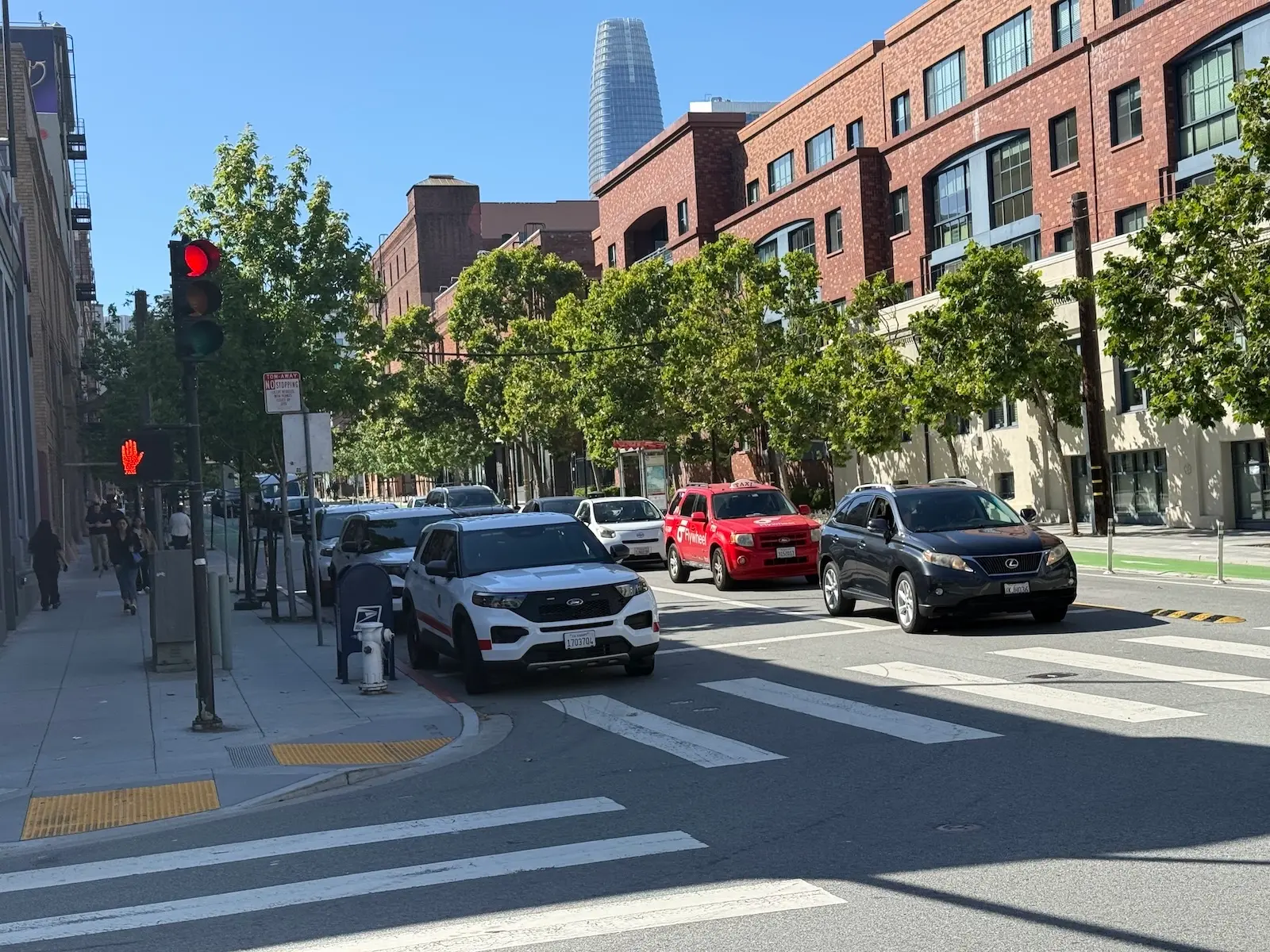
A few examples that show the range of commercial space found in SoMa.
415 Mission St
Property type
Office Space
181 Fremont St
Property type
Office Space
For a specific space: Confirm current availability and the exact condition, configuration, access, and permitted use of any specific space.
Compare the location against how your business actually operates.
Understand SoMa as a broad central San Francisco commercial district shaped by Market Street, larger blocks, creative offices, converted warehouses, Mission Bay, and the waterfront.
Rofo will help you define what you're looking for and create a Location Brief for your search.
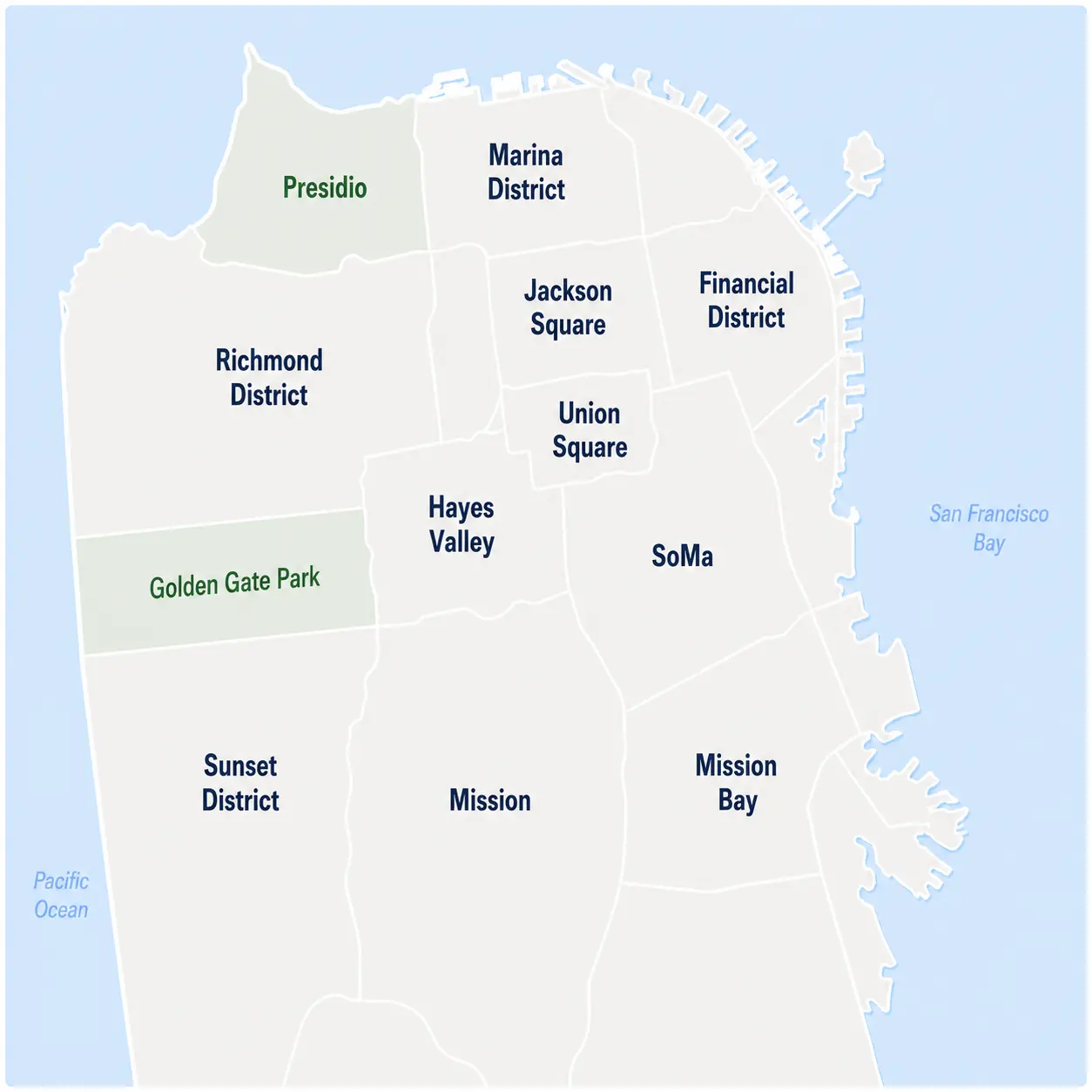
Use the map and links to compare nearby commercial areas.
Early-stage companies often choose SoMa for energy and proximity. Rofo looks at what happens next: how the office supports recruiting, client trust, team routines, and future growth.
Broad central San Francisco commercial district where adaptive office buildings, creative-company demand, downtown access, and Mission Bay adjacency overlap.
SoMa should not be read as one uniform office market. The district changes by block, moving from Market Street and Central SoMa into South Park, Townsend, China Basin, and the Mission Bay edge.
Adaptive office, creative office, showroom, flex, service-commercial, and mixed-use commercial buildings define the public story more than a single polished tower inventory.
It fits teams that want central San Francisco access, creative-commercial texture, and enough flexibility to compare older adaptive buildings with more conventional office options nearby.
SoMa's value depends on which edge matters most: downtown and Market Street, South Park, Caltrain and Townsend, Mission Bay, or the waterfront.
The Financial District offers more formal office identity; Mission Bay offers newer institutional gravity; Dogpatch adds a more production-adjacent southern waterfront edge.
SoMa is a broad central San Francisco commercial district for teams that want adaptive office buildings, creative-commercial texture, and proximity to downtown, Mission Bay, South Park, and the waterfront without a formal tower-core feel.
Compare if you are choosing between adaptive creative-office texture and a formal downtown office core.
Compare if institutional, life-science, or newer large-parcel office context matters.
Compare if a smaller historic boutique office setting near downtown is more appropriate.
Compare if Peninsula professional/startup context may fit better than central San Francisco adaptive office geography.
Compare if larger office/R&D buildings and South Bay engineering access may fit better than urban San Francisco creative-tech context.
Compare if East Bay office/R&D practicality may fit better than SoMa's San Francisco centrality.
Compare if East Bay BART-centered office access could fit better than SoMa's San Francisco adaptive office environment.
A strong SoMa Commercial Market Evidence collection must show the district's range without collapsing it into one stereotype. It should explain Transbay towers, central adaptive reuse, West SoMa creative floorplates, startup-scale buildings, and Townsend corridor commute logic while preserving clear tradeoffs against the Financial District, Mission Bay, Jackson Square, South Beach, and Design District alternatives.
Salesforce Tower defines the post-Transbay era of San Francisco office development and large-scale technology headquarters demand.
What it does not prove: May be too costly, formal, or large-scale for teams seeking SoMa's adaptive creative inventory or smaller startup-oriented buildings.
181 Fremont represents the premium Transbay mixed-use model at the high end of modern SoMa office decisions.
What it does not prove: May not provide the adaptive texture, cost profile, or creative-office informality that makes other parts of SoMa valuable.
303 Second is a core SoMa and South Financial District comparison building for large-floorplate Class A office space.
What it does not prove: The boundary position can make the tenant decision feel less purely SoMa and more like a South Financial District or South Beach comparison.
680 Folsom is a strong example of large-scale adaptive reuse turning older SoMa commercial stock into modern technology workspace.
What it does not prove: May not offer the same tower image as Transbay buildings or the same campus and research context as Mission Bay.
140 New Montgomery is essential for understanding SoMa's historic office character and technology-era reuse.
What it does not prove: Users should validate suite configuration, building systems, expansion options, and whether historic character supports the actual work pattern.
650 Townsend represents West SoMa creative floorplates and technology demand near Caltrain.
What it does not prove: The corridor can feel more utilitarian than Transbay or the Financial District, and exact commute fit depends heavily on employee geography.
888 Brannan explains SoMa's warehouse-to-headquarters pattern for large creative technology users that need scale without adopting a conventional tower identity.
What it does not prove: May be less polished than newer towers and less specialized than Mission Bay research or healthcare-adjacent environments.
795 Folsom is a useful mid-rise reference for central SoMa without jumping directly to trophy towers.
What it does not prove: May not provide the symbolic headquarters signal of Transbay towers or the larger creative floorplates of West SoMa buildings.
144 Second is a practical representative building for smaller and mid-sized technology, professional-service, and creative teams near the downtown boundary.
What it does not prove: May not provide enough image, amenities, or expansion capacity for larger companies and may still require block-by-block context validation.
600 Townsend helps explain the Townsend corridor and the way SoMa supports teams prioritizing Caltrain, creative space, and practical layouts.
What it does not prove: The experience can feel more corridor-oriented and less polished than Transbay, the Financial District, or newer Mission Bay buildings.
These examples explain durable operating patterns. Confirm current availability, suite condition, permitted use, and property-specific capability separately.
A few views that capture SoMa’s mix of converted warehouses, creative offices, and dense urban fabric.
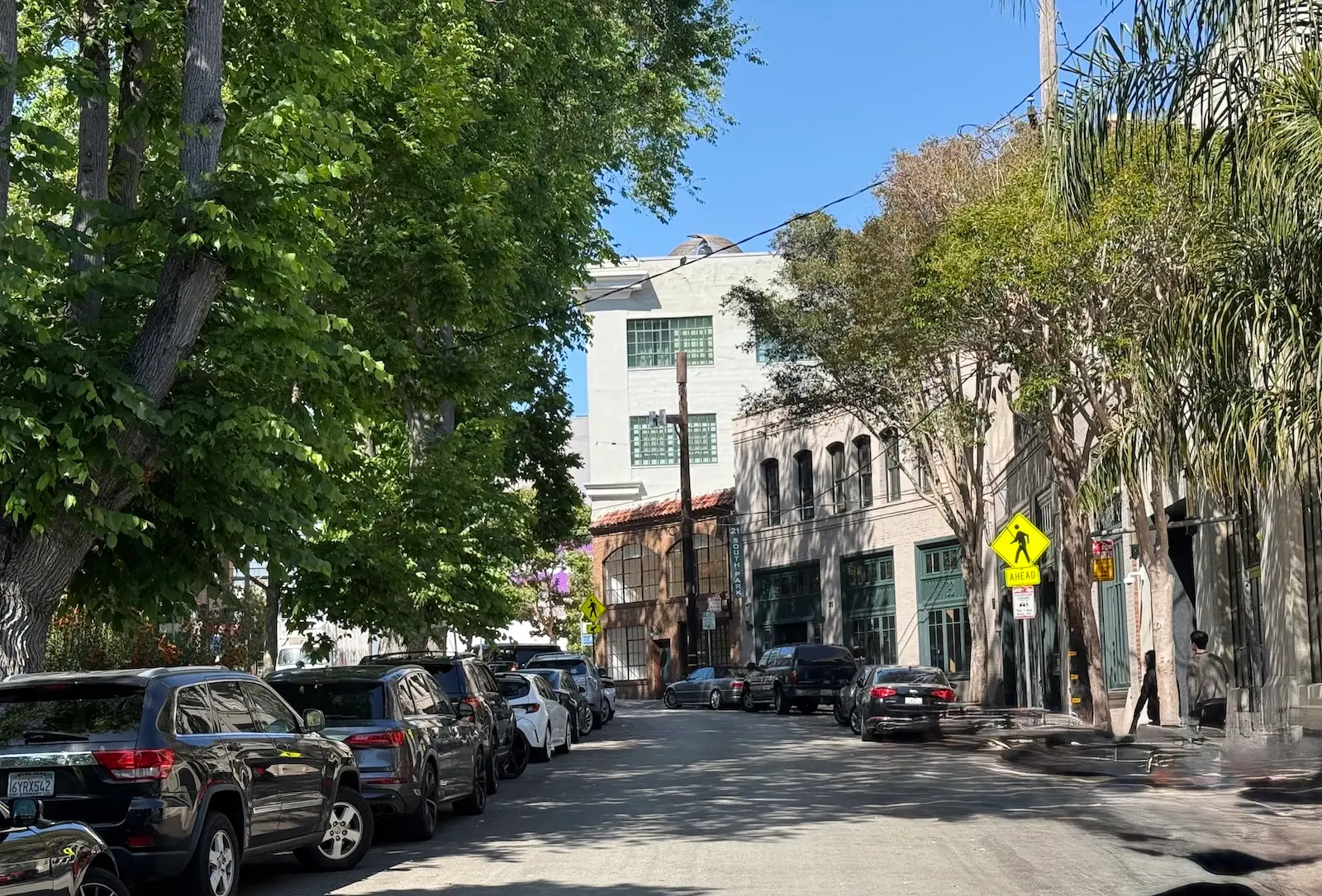
These certified examples show how this location can fit different business needs. They are examples, not universal answers.
Use these comparisons to see how representative buildings express different tradeoffs within and around the district.
Compare Salesforce Tower and 181 Fremont when deciding within SoMa. Salesforce Tower is best understood as a district icon, while 181 Fremont is best understood as a innovation benchmark.
Compare Salesforce Tower and 680 Folsom when deciding within SoMa. Salesforce Tower is best understood as a district icon, while 680 Folsom is best understood as a adaptive reuse benchmark.
Compare 650 Townsend and 888 Brannan when deciding within SoMa. 650 Townsend is best understood as a creative benchmark, while 888 Brannan is best understood as a adaptive reuse benchmark.
Compare 600 Townsend and 414 Brannan when deciding within SoMa. 600 Townsend is best understood as a creative benchmark, while 414 Brannan is best understood as a creative benchmark.
Explore commercial space types across the broader San Francisco market.
Compare SoMa with nearby San Francisco neighborhoods and commercial districts.
Use the broader city page and market guide to continue comparing commercial real estate options across San Francisco.