555 California
555 California St
Property type
Office Space
Common in this district
FinanceLegalProfessional services
Explore property →The Financial District is San Francisco’s densest concentration of traditional downtown office buildings. Large office towers, older high-rises and smaller professional buildings support finance, legal, corporate and business-service users that value a recognizable central address and proximity to other downtown firms. Compared with SoMa, the area feels more formal, vertically concentrated and oriented around established office blocks.
Common across the district; individual buildings vary.
A few examples that show the range of commercial space found in Financial District.
555 California St
Property type
Office Space
101 California St
Property type
Office Space
For a specific space: Confirm current availability and the exact condition, configuration, access, and permitted use of any specific space.
Compare the location against how your business actually operates.
Understand the Financial District as San Francisco’s formal downtown business core: vertical office buildings, historic commercial blocks, transit access, client-facing services, and a tighter office-oriented setting than SoMa.
Rofo will help you define what you're looking for and create a Location Brief for your search.
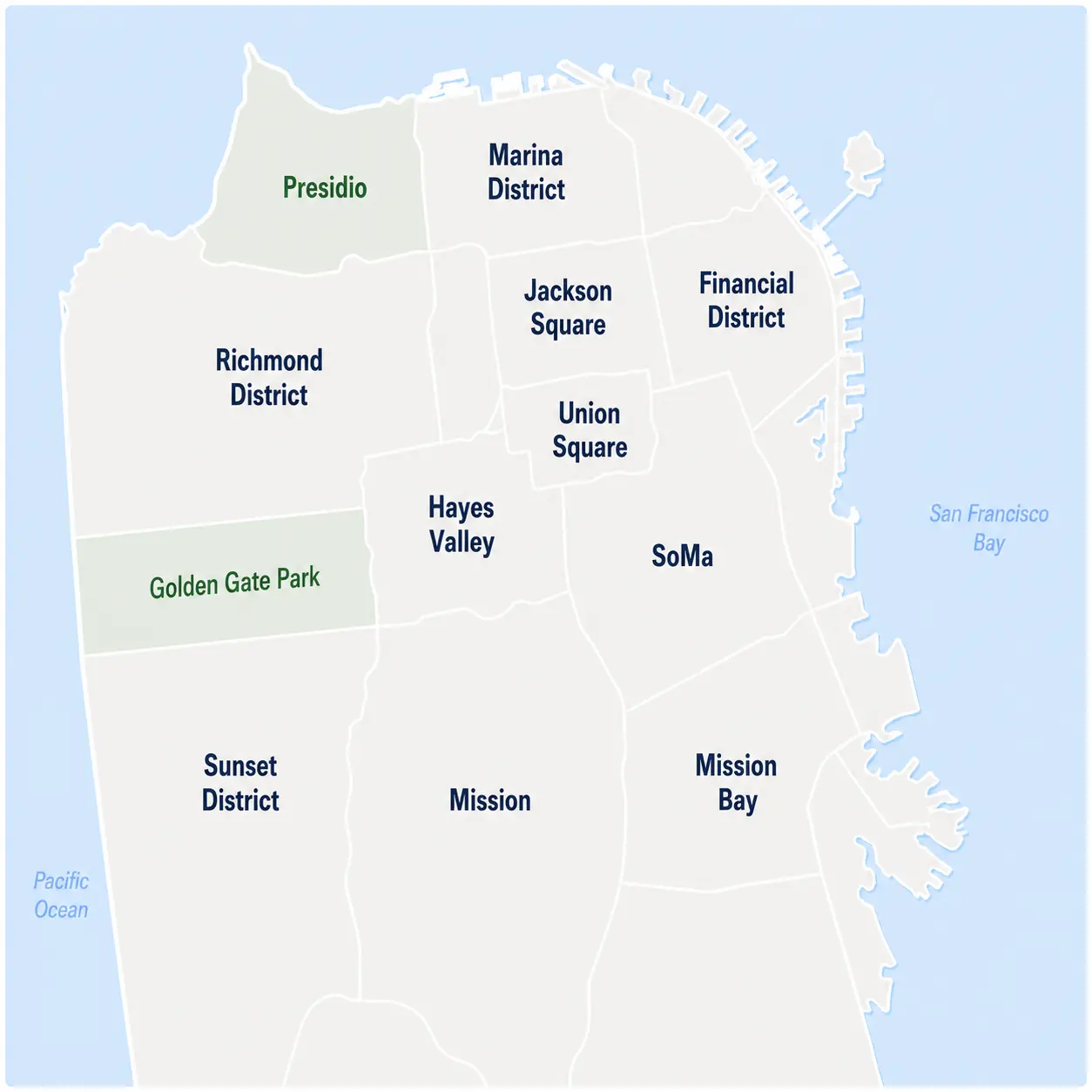
Use the map and links to compare nearby commercial areas.
Maturing companies often need the office to communicate more than energy. Rofo compares whether formal downtown credibility or a quieter boutique setting better supports clients, partners, and senior talent.
San Francisco's formal downtown office core: vertical, transit-centered, client-facing, and more concentrated than the mixed-use districts south of Market Street.
The Financial District is defined by established office towers, older commercial buildings, dense downtown blocks, and a sharper vertical profile than SoMa's broader warehouse, creative-office, and mixed-use pattern.
Office is the clearest commercial pattern, supported by street-level retail, coworking, hospitality, and services that support client meetings and daily downtown business routines.
It fits organizations that need a formal downtown address, client access, transit reach, and proximity to finance, legal, professional-service, and executive meeting patterns.
The district is oriented around BART, Muni, ferry, and walkable downtown access rather than campus-style office geography or car-oriented corridors.
Jackson Square softens the district into smaller historic commercial blocks; the Embarcadero adds waterfront and ferry context; SoMa marks the transition into broader mixed-use and adaptive commercial geography.
The Financial District is San Francisco's most formal downtown office core, defined by vertical office buildings, transit concentration, client-facing business services, and tighter office density than SoMa.
Compare if you are weighing formal downtown office identity against SoMa's adaptive commercial fabric.
Compare if smaller historic boutique office blocks could work better than tower-core buildings.
Compare if newer institutional or life-science adjacency is more important than formal CBD access.
Compare if cross-bay downtown office tradeoffs are part of the decision.
Compare if Peninsula professional context may fit better than San Francisco CBD identity.
Compare if South Bay client-facing amenities and mixed-use headquarters context may fit better than San Francisco CBD identity.
A strong Commercial Market Evidence collection explains distinct commercial decisions through source-supported examples. Quality, role diversity, and comparison value matter more than count.
555 California explains the formal corporate end of the Financial District. It is the reference point for companies that want a recognized downtown tower, institutional scale, and a client-facing address.
What it does not prove: May be too formal or costly for teams that need flexibility, creative character, or a less hierarchical workplace signal.
101 California shows the practical high-quality middle of Financial District demand. It is polished and recognizable, but its strongest teaching value is transit access, broad professional-service usefulness, and daily workplace function.
What it does not prove: May not provide the same flagship signal as 555 California or Salesforce Tower.
345 California Center explains the executive-tower choice that sits between large corporate symbolism and more everyday professional-service utility.
What it does not prove: May not deliver the same institutional scale as 555 California or the same broad transit utility as 101 California.
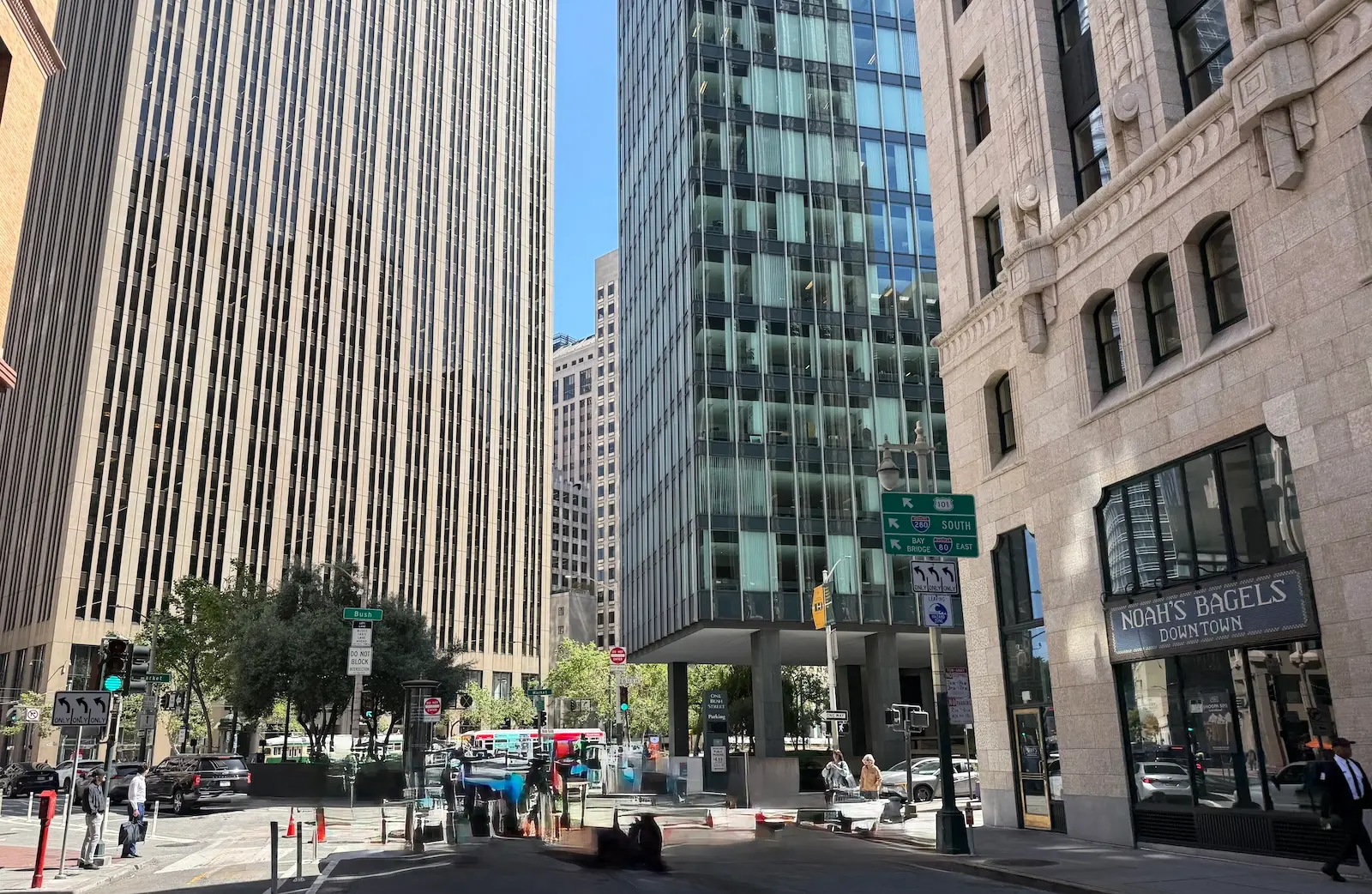
One Bush Plaza shows the older modernist office layer that helped define San Francisco's downtown before the later trophy-tower era.
What it does not prove: May not match the flagship image or amenity package of newer repositioned towers.
Transamerica Pyramid Center explains the role of skyline identity and north-downtown character in a Financial District decision.
What it does not prove: May not be as central to BART-heavy commutes as Market Street towers.
One Sansome explains how older Financial District assets can be repositioned around transit, hospitality, amenities, and lobby-level activity.
What it does not prove: Repositioning does not change the basic CBD tradeoffs around parking, cost, and formal downtown identity.
50 California explains the Embarcadero-facing office decision: a traditional CBD tower with strong access to the waterfront side of downtown.
What it does not prove: May not have the same distinct brand signal as 555 California, Transamerica Pyramid Center, or Salesforce Tower.
100 Pine prevents the evidence set from becoming only trophy or landmark assets. It represents the durable professional-service office inventory many tenants actually compare.
What it does not prove: Less symbolic than the district's landmark towers and less culturally distinct than Jackson Square or SoMa alternatives.
Two Embarcadero Center explains that the Financial District is also a mixed-use office and retail environment connected to the waterfront.
What it does not prove: May feel less focused than a standalone tower.
One Maritime Plaza explains the northern Financial District edge where office tower identity, waterfront proximity, and Jackson Square adjacency overlap.
What it does not prove: May not provide the same central-transit simplicity as Market Street towers or the same intimate boutique feel as Jackson Square.
These examples explain durable operating patterns. Confirm current availability, suite condition, permitted use, and property-specific capability separately.
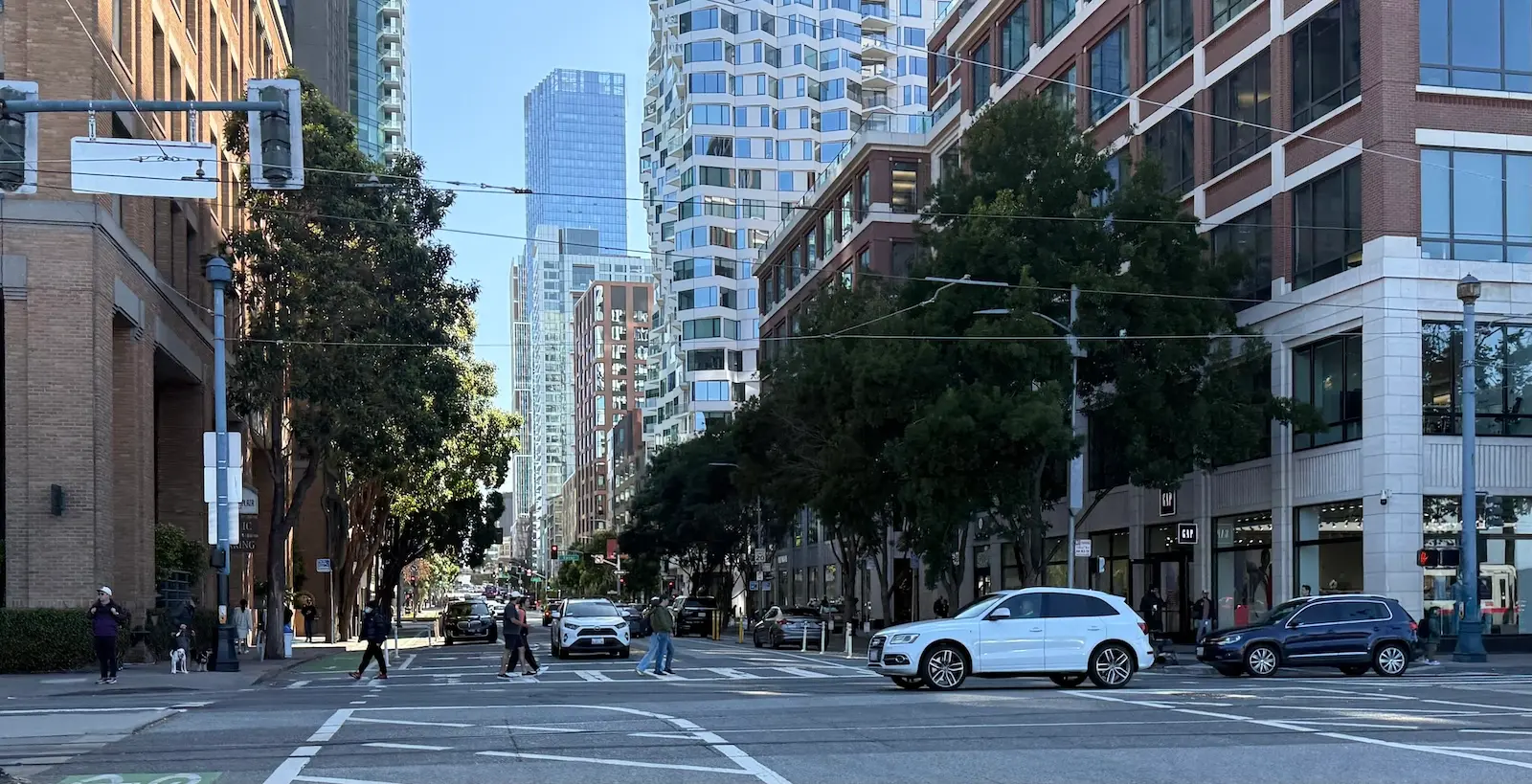
A few views that show the Financial District’s vertical office core, street-level business setting, and downtown San Francisco context.
These certified examples show how this location can fit different business needs. They are examples, not universal answers.
Use these comparisons to see how representative buildings express different tradeoffs within and around the district.
Compare 555 California and 101 California when deciding within Financial District. 555 California is best understood as a corporate benchmark, while 101 California is best understood as a corporate benchmark.
Compare 555 California and One Sansome when deciding within Financial District. 555 California is best understood as a corporate benchmark, while One Sansome is best understood as a adaptive reuse benchmark.
Compare 101 California and 345 California Center when deciding within Financial District. 101 California is best understood as a corporate benchmark, while 345 California Center is best understood as a executive benchmark.
Compare Transamerica Pyramid Center and One Maritime Plaza when deciding within Financial District. Transamerica Pyramid Center is best understood as a district icon, while One Maritime Plaza is best understood as a executive benchmark.
Use these relationships to read the Financial District as San Francisco's formal downtown office core, and to compare it with nearby districts that shift toward mixed-use, boutique, visitor-facing, waterfront, or cross-bay business settings.
Broader, more mixed-use, and more adaptive-commercial south of Market Street; useful as the clearest contrast to the Financial District's tighter office-core form.
Adjacent edgeImmediately north and smaller-scale, with historic commercial buildings and a more boutique office texture near the formal downtown core.
The waterfront and ferry edge of the district, important for transit access, client meetings, and the Financial District's eastern downtown identity.
A nearby retail, hotel, and visitor-serving district that contrasts with the Financial District's office and professional-service concentration.
Search alternativeA newer southern waterfront district to compare when teams want modern office, institutional, or life-science-adjacent context rather than a traditional downtown core.
Cross-bay comparisonAn East Bay business district with civic adjacency, BART access, and a practical cross-bay comparison for formal office and professional-service users.
Explore commercial space types across the broader San Francisco market.
Use the broader city page and market guide to continue comparing commercial real estate options across San Francisco.